Exactly when to hang your hummingbird feeder in your area, according to ornithologists
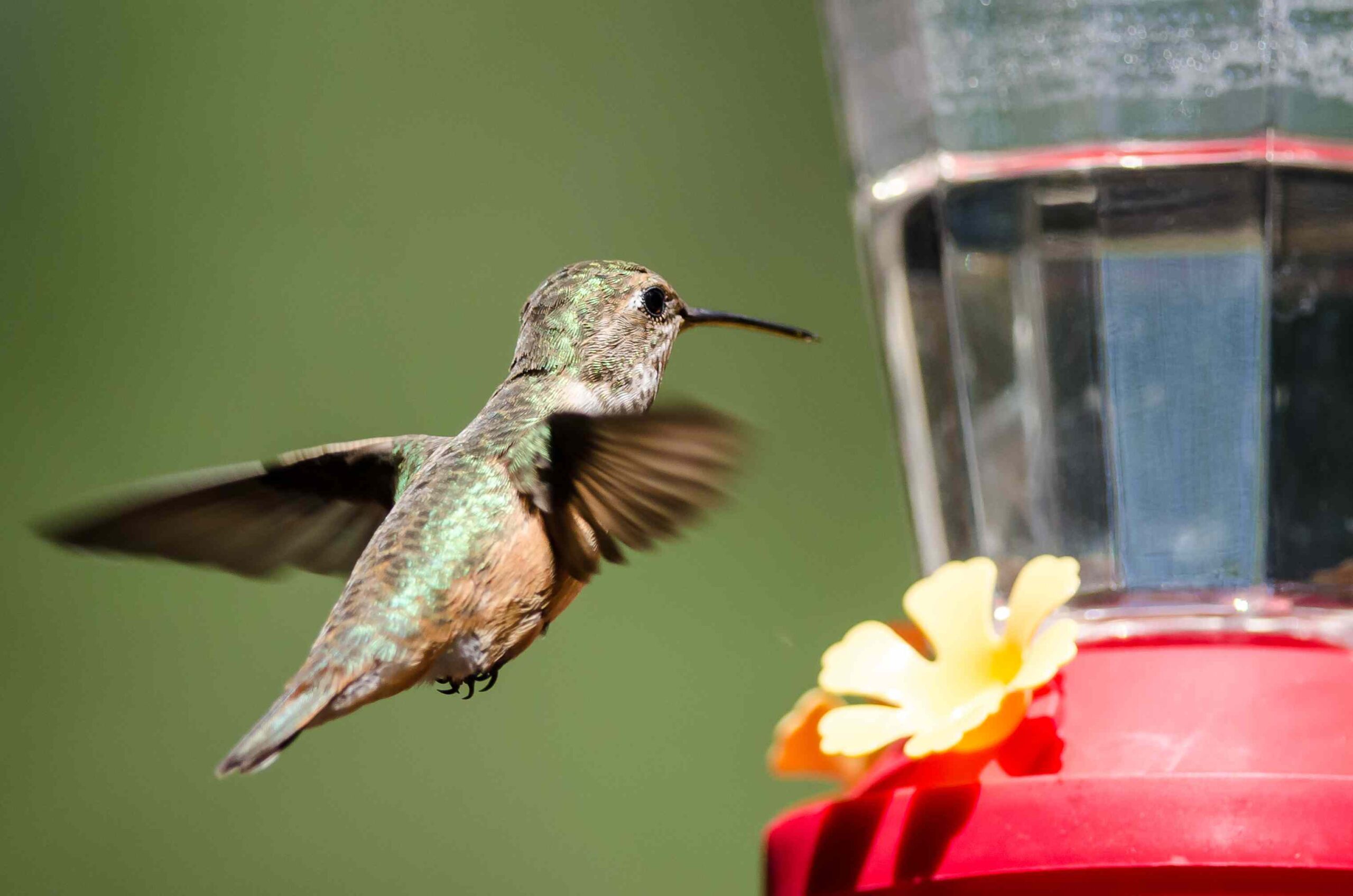
When these weary, winged travelers finally arrive, they will be hungry and ready to eat immediately.
Year after year, people are overjoyed as they watch their loyal hummingbirds return to their feeder. It’s one of those special moments that signals warmer, brighter days are ahead. But hanging that feeder too early or too late can mean missing the brief window when these tiny birds need it most. While many people associate feeders with the start of spring, hummingbird migration depends heavily on geography and weather patterns, which means the right timing varies widely across the country.
To help you get it right, we asked bird experts to break down when to hang your hummingbird feeder based on where you live, from the southern states where hummingbirds arrive early to northern regions where they tend to appear later in the season (with some exceptions). Here are the rough timing guidelines by region, followed by a few simple, must-know feeder tips to help you support hummingbirds once they arrive.
Meet the Experts
- Mary Mack Gray, an in-house ornithologist and bird expert at Birdbuddy
- Lisa Kelly, an animal care supervisor at Teatown Lake Reservation, a nonprofit nature preserve
Ideal Times to Hang Hummingbird Feeders
Every region in the country has what ornithologist Mary Mack Gray calls a “safe date,” which is the point when hummingbirds typically begin arriving without a significant risk of freezing temperatures. There is also a general range you can follow alongside your local weather reports. The date ranges and safe dates listed below are based on guidance from Gray.
| Hummingbird Feeder Timing | |
|---|---|
| Location | Timing |
| Gulf Coast/Florida | Mid-February to early March |
| Southern/Southwest States (TX, AZ, CA) | Late February to mid-March |
| Pacific Northwest | Mid-March to early April |
| Southeast (GA, SC, NC, VA) | Late March to early April |
| Mid-Atlantic/Midwest/Ohio Valley | Mid-April to early May |
| Midwest/Rocky Mountain Region | Late April to early May |
| Northeast/New England | Late April to early May |
Gulf Coast and Florida
Ideal Time: Mid-February to early March
Gray says the Gulf Coast and Florida see some of the earliest hummingbird arrivals in the country. For most areas, March 1 is considered a safe date where you’ll start to see birds begin moving through without the risk of extended cold snaps. Putting feeders out around this time helps support those early migrants.
The South and Southwest (Texas, Arizona, California)
Ideal Time: Late February to mid-March
Gray notes that much of the South and Southwest warms early enough to start feeding hummingbirds by late winter. In these states, March 1 is generally a reliable benchmark, especially in lower elevations and warmer zones. Hanging feeders at this point matches predicted migration patterns. “Putting feeders out early may also have the added benefit of attracting other sugar-loving birds, like Orioles!” she adds.
The Pacific Northwest
Ideal Time: Mid-March to early April
The Pacific Northwest follows a slightly different pattern than the rest of the north because Rufous hummingbirds arrive early, often reaching Oregon in early to mid-March, according to Gray. To support these early migrants, she recommends putting feeders out by March 1, even though other species arrive later.
The Southeast (Georgia, South Carolina, North Carolina, Virginia)
Ideal Time: Late March to early April
In the Southeast, timing depends on how far north you are located. Gray recommends March 15 for more southern parts of the region, while April 1 is safer for northern areas, where the start of spring arrives later. The goal is to align feeder placement with warming overnight temperatures and early blooms, so pay attention to local forecasts.
The Mid-Atlantic, Midwest, and Ohio Valley
Ideal Time: Mid-April to early May
For these regions in the Mid-Atlantic, Midwest, and Ohio Valley, Gray advises a bit more patience. April 1 often marks the earliest reasonable window, though cooler springs may push arrivals closer to mid-April. Be careful! Putting feeders out too early can expose birds to cold nights that limit natural food sources.
The Midwest and Rocky Mountain Region
Ideal Time: Late April to early May
Higher elevations and lingering cold mean hummingbirds arrive later here. Gray points to May 1 as a dependable guideline, when temperatures stabilize and natural nectar sources are more readily available.
The Northeast and New England
Ideal Time: Late April to early May
In the Northeast, spring arrives more slowly, unfortunately. Gray says May 1 is the most reliable reference point because extended or unexpected cold snaps are still common earlier in the season. If the weather allows, you may be able to put your feeders out as early as mid-April, according to Lisa Kelly, an animal care supervisor at Teatown Lake Reservation.
Tips for Setting up a Hummingbird Feeder for the First Time
If you’ve never set up a hummingbird feeder before, there are a few nonnegotiable requirements to make sure your visitors stay healthy.
First, make sure you clean hummingbird feeders weekly at a minimum and more often in hot weather. Gray recommends investing in glass feeders if you live in an area that gets extreme heat because these are more pest-resistant, though Kelly points out that while glass is important, you also want to find a feeder that is easy to clean (so you actually do it). To clean it, soak it in a vinegar-and-water solution.
For the food, Gray and Kelly both recommend making a 1:4 mixture of sugar and water—no artificial mixes! “Boil for two minutes, cool, and fill, avoiding red dye,” Kelly explains. (Red dye isn’t needed—a common myth—because hummingbirds are drawn to the red color of feeders, not the nectar itself.) Make sure you change out that mix with a freshly made batch every time you clean the feeder. Homemade nectar will typically only last up to a week in the fridge.
Spacing is the last thing you should consider if you plan on having multiple feeders: “Hang feeders 20 to 25 feet apart, preferably in the shade of an overhang or tree, to prevent territorial fighting,” Kelly says. The goal should be to create distinct feeding zones.
Read the original article on Real Simple