Uncork la dolce vita at Vignamaggio in Tuscany
On screen direct from Italy, I had the most delightful conversation with Lucia Minoggio, General Manager at Vignamaggio. Having been sent six wines (as samples) for tasting and review, it was a joy to learn more about the 400 hectare estate (of which 65 hectares are under vine) located halfway between Florence and Siena in Alta Valle della Greve between Greve and Panzano in Chianti. In fact, the river divides the territory whereby the right bank is under the “Greve” Unità Geografica Aggiuntiva (UGA) and the left bank belongs to “Panzano” UGA. This area is considered “the heart of Chianti Classico” as well as one of the “cradles of Sangiovese.” Lucia Minoggio shared that “the best expression of Sangiovese is from Chianti Classico.”
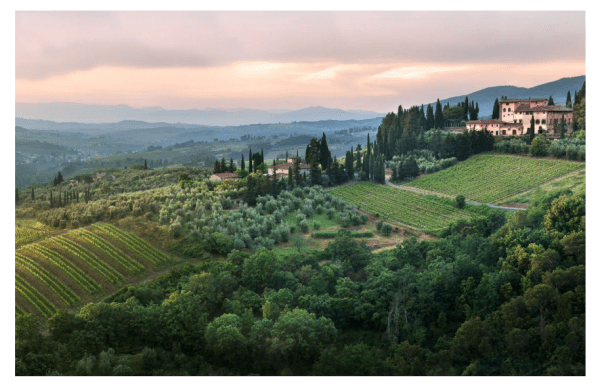
Not only is Vignamaggio producing world class Chianti Classico wines, including the exceptional Gran Selezione Monna Lisa, visitors are fortunate to go to the property are able to see a sustainable farm replete with vegetable gardens, olive groves, forests, pastures, ornamental gardens and, of course, thriving vineyards.
Their 65 hectares of vines are cultivated at around 330 meters above sea level and are divided into seven unique micro-zones, each with its distinct soils and microclimates that help influence the characteristics of the wines. A wide diurnal temperature shift, optimal ventilation, and complex soils positively affect the ripening of the grapes so that they deliver exactly what we crave in the glass.
Photo Credit: Vignamaggio
Historic Vignamaggio has been an Agricultural Estate since 1404
Truly special, Vignamaggio boasts seven centuries of history and is one of the oldest agricultural estates in Italy. Since the 15th century, vineyards have been an important facet of the agricultural landscape and wine production “has spanned ages, properties, and generations.”
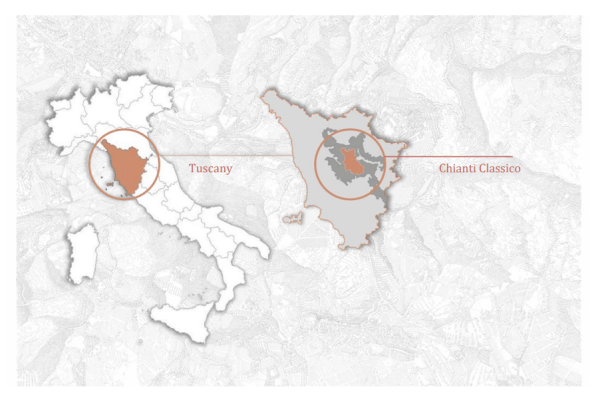
Photo Credit: Vignamaggio
From the Gherardini family to the Renaissance-era Gherardi family; from Count Bino Sanminiatelli to Atty. Gianni Nunziante; and to the current ownership of Patrice Taravella, one of the most visionary architects of our time, Vignamaggio has never ceased to be a polycultural center capable of producing wine, culture, and emotions.
A wine tourism gem endowed with valuable historical and landscape importance, Vignamaggio is among the founding companies of the Consorzio del Chianti Classico, which it proudly represents all over the world.
Today, wine is the excellence that leads the rediscovery of an age-old agricultural tradition, where polycultural vocation becomes the dream come true of a pragmatic and magnetic place. Every product of Vignamaggio is an ode to the bond with its territory; it blossoms, grows, and is transformed onsite for guests and customers worldwide, in harmony with the “expertise” and “essence” of an exceptional place. From Vignamaggio
Lucia Minoggio emphasizes the importance of the human investment at Vignamaggio in order to “bring back pieces of the ancient estate through history and connections in order to give meaning.” A new vineyard manager, Andrea Dondon, offers a modern , scientific approach to viticulture; his goal is to give the vines everything they need for a long and healthy life.
Selected Wines of Vignamaggio
Helping to tell Vignamaggio’s story is each bottle’s label expressing “a polyculture rediscovered.” The villa at the top of the label is a symbol of warmth and hospitalty. An outline of the garden reflects modern techniques and the nod to the future. Towards the lower part of the logo, rippled lines indicate olive trees harkening to their historic olive oil producation. Straight lines identify grains alluding to the diversity of the crops grown, and finally the vineyard design symbolizes wine production.
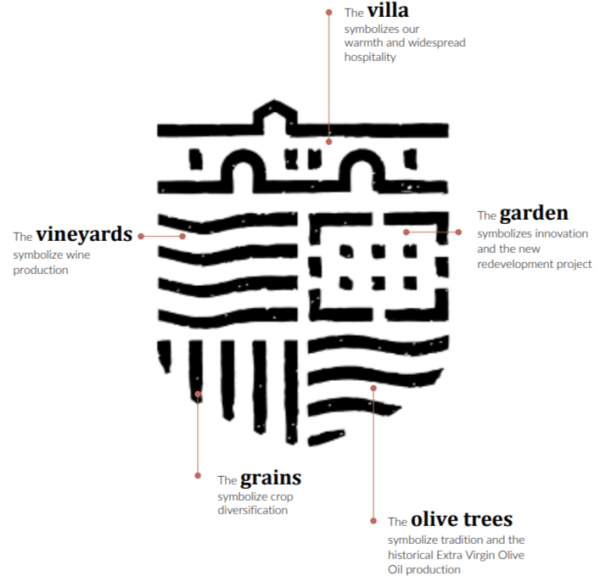
Photo Credit: Vignamaggio
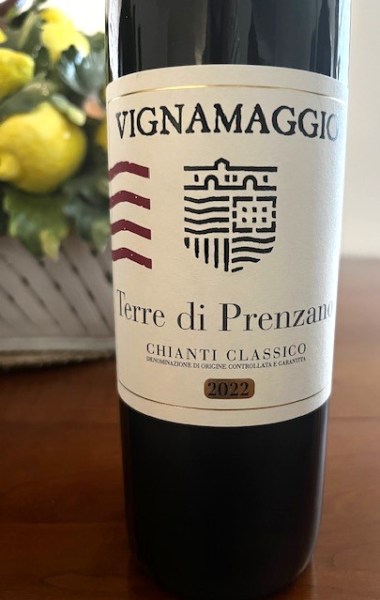
Our first wine tasted was Terre di Prenzano Chianti Classico 2022. Named after Vignamaggio’s ancient estate, Prenzano, this intense wine, aged in large oak barrels, presented fresh aromas of black cherries, balsamic, oregano, and chocolate. Soft tannins and moderate acidity framed notes of blueberries, plums, vanilla, and spice, all leading to a lingering finish. Burger night? Open this bottle!
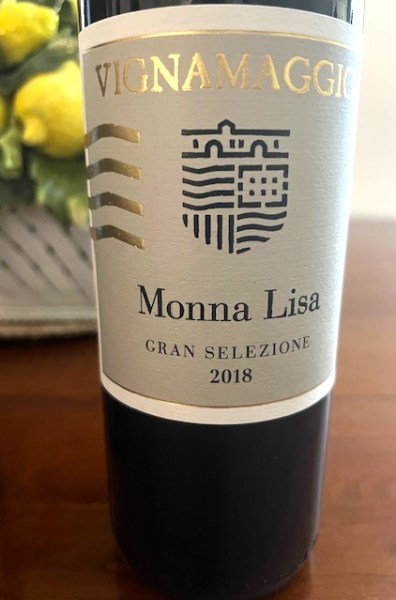
Named after one of the owners, Monna Lisa de Gherardini who is the iconic Mona Lisa portrayed by Leonardo da Vinci between 1503 and 1506, Monna Lisa Chianti Classico Gran Selezione 2018 was rich and elegant with mostly Sangiovese and a touch of Cabernet Sauvignon. Wafting from the glass were aromas of red florals, black fruit, mint, tobacco, and anise. Full bodied with silky tannins and bright acidity, this fruit forward wine was structured and balanced. Aged for 30 months with at least 6 months in the bottle, pair with your favorite dish from Nonna.
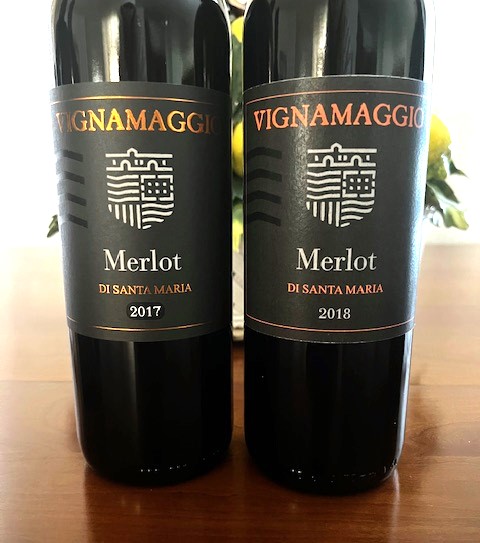
Merlot di Santa Maria 2017 is named after the 25+ year old parcel on which the Merlot is cultivated. Produced in Greve in Chianti, this fresh and juicy wine offered a rich bouquet of blueberries, cherries, tobacco and mint. On the palate, subtle red and purple flavors were lifted by soft tannins and vibrant acidity. Aged for about 20 months in French oak barriques, enjoy this wine with pork chops or a Mediterranean meze platter as an antipasti.
Next, Vignamaggio Dal 1404 Merlot 2018 was a mouthwatering win with a piping hot pepperoni and mushroom pizza. On the intense nose and full-bodied palate, I found spice, dried herbs, black licorice, and black cherries. Rich with a long finish, this should be enjoyed right now!
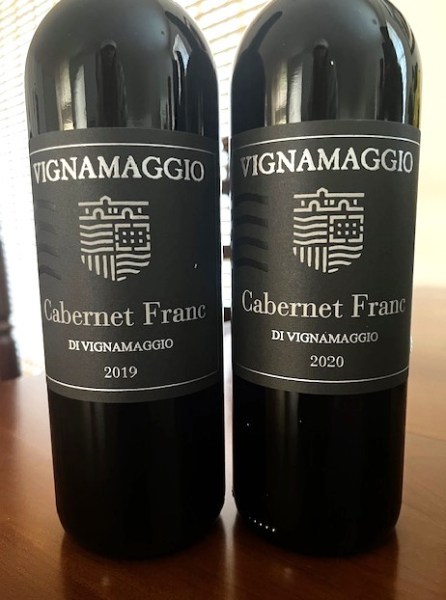
Cabernet Franc di Vignamaggio 2019 was yet another elegant, structured wine. From Cabernet grapes rediscovered by chance on 40+ year old vines in the 1990s, it was aged for about 20 months in French oak barriques then slowly aged in the bottle. Mesmerizing aromas of crushed blueberries, black currants, mint, sage, and sweet red pepper, this was a joy. On the palate, flavors were beautifully balanced between fruit, spice, tannins, and acidity, making this a lush, food friendly wine. Consider serving this complex wine with braised short ribs and garlic mashed potatoes.
Sipped with homemade lasagna one evening, Cabernet Franc di Vignamaggio 2020 was broad, deep, and dark with aromas and flavors of smoke, black and purple fruits, oak, and nuts. Satin like tannins and vibrant acidity helped frame this polished wine that was aged for 18-24 months in French oak then another 8 months (at least) in the bottle.
Hospitality is an Immersive Experience at Vignamaggio
Vignamaggio’s widespread hospitality is an invitation to visit, too. Guests can enjoy activities designed to “make the day wonderful.” Stay at La Pensione hotel, dine at the restaurant, and stroll through gardens, woods, and agricultural lands that surround the accommodations. They are all part of the historic charm and modernity that is now Vignamaggio. Find more about your next escape, click HERE.
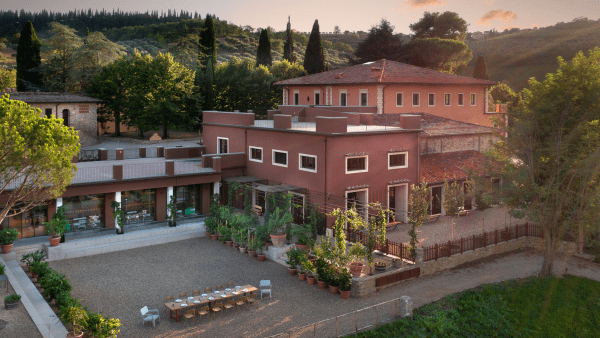
Photo Credit: Vignamaggio
As Lucia Minoggia reiterated, Vignamaggio is “a vast garden where land and man mutually bring out their best, where crops are diversified, and we can live in harmony within a sustainable community.” And, of course, we can indulge in their exceptional wines. This is la dolce vita!
Cheers! ~ Cindy
The post Uncork La Dolce Vita at Vignamaggio in Tuscany appeared first on Grape Experiences.